technature
technature supports teams through AI adoption with psychological safety, nervous system regulation, and a mindset shift so that you can actually see the return on your AI implementation.
Your team is being asked to adopt AI. The tools are there. The mandates are there. What is not there is the human support to make the adoption actually land, in a way that keeps people connected to their own judgment, their creativity, and the values of the company, so your clients and customers still feel the human in your product.
AI resistance is not irrational. It is a rational response to a process that is asking people to change how they work, without addressing the fundamental friction that it points to. That is the gap technature closes.
Regular AI usage jumped 13% in 2025, while confidence in using the technology fell sharply by 18%. For the first time in three years, overall worker confidence declined. The tools are moving faster than the humans using them. ManpowerGroup Global Talent Barometer, 2026
The tools are moving faster than the humans using them, because of the way they are being introduced. AI implementation is not simply a technology upgrade. It is a shift in how humans work, think, and relate to their own intelligence. Confidence drops when implementation is focused on the technology and not on the human rhythm of learning.
56% of workers globally report receiving no recent AI training. 57% have no access to mentorship opportunities. Companies are handing employees powerful tools without the context or support to use them well. ManpowerGroup Global Talent Barometer, 2026
Companies are handing employees powerful tools without the context or support to use them well. A tool without a framework ends up not being an upgrade, but a cause for more friction.
92% of CIOs have been asked to defend AI outcomes they could not fully explain. 85% say explainability gaps have already delayed or stopped AI projects. Explainability means being able to say clearly what the AI did, why it did it, and whether it is accurate and aligned to the company's outcomes. Dataiku / Harris Poll Survey of 600 Enterprise CIOs, 2026
Most teams have never been given the framework to answer those questions. Where there are gaps in the framework or communication, AI amplifies that gap. It does not create the bridge people hoped for.
AI training that only teaches the tool is only half the job. The skill gap is real. But the confidence gap, the space between knowing how to use AI and feeling sovereign while you do, that is a human gap. That is what technature addresses.
Your team is using AI but morale, confidence, or connection has quietly dropped.
You want your team to adopt AI but you care how they do it.
You are facing resistance to AI adoption and desire ease in adoption.
You want AI integrated in a way that keeps your people human, creative, relational, and connected to the company's mission.
You actually believe things can be done differently.
Your company does not want to be AI blind.
We start with the human being using it: their nervous system, their sense of sovereignty, their relationship to change, and their understanding of what AI actually is. It builds from there.
We draw from Rudolf Steiner's philosophy of natural systems, embodied practices, and research from AI ethics specialists and human psychology. The goal is to create an experience that allows people's state of being to catch up to the technology.
Humans are nature. When we forget that inside technology, we lose ourselves. The work of technature is remembering.
AI adoption triggers real physiological responses. Fear, resistance, and cognitive fatigue are not attitude problems. They are nervous system events. We address them directly.
People do not adopt new tools well when they feel unsafe. We build the conditions for genuine learning: where resistance can be named, questions can be asked, and people can stay connected to their own judgment.
Skill training teaches what to do with AI. Our work teaches who to be while using it. That distinction is why confidence drops even when training happens. Both halves are required.
Resistance to AI is not an irrational response. It is a nervous system response to rapid, unaddressed change. We give teams language for their resistance, context for the moment they are living through, and practices to move through it without losing themselves.
When people use AI without a grounded sense of their own intelligence and judgment, they begin to defer to the machine. We build the practices that keep your team connected to their creativity, their discernment, and their own thinking, even as the tools get more capable.
AI moves fast. Company values move slow. Without deliberate work, the gap between what your company says it stands for and how AI is actually being used inside it widens. We keep those threads connected.
Your customers can feel when there is still a human behind your product. 76% of consumers say they would switch brands over a lack of AI transparency. The best way to ensure that human presence is felt externally is to make sure your employees feel their own humanity while doing the work. That is where it starts. Relyance AI Consumer Trust Survey, 2025
A full day workshop. Four movements. A team that leaves with language, practices, and a fundamentally different relationship to AI.
Why AI adoption feels threatening before it feels useful. The neuroscience of change, historical context for this technological moment, and language for what the team is actually experiencing. People leave this block feeling understood rather than managed.
A clear, honest picture of what AI can and cannot do, and what human intelligence is and why it cannot be replicated. The distinction between skill and mindset. Teams leave with a reframe that reduces fear and builds discernment.
The embodied core of the day. Practices for remaining connected to your own judgment, creativity, and humanity while working with AI tools. How to notice when you have handed over too much, and how to come back. Seeing AI as a creature-type tool rather than an authority.
Who owns the work when AI is involved. The ethical lines specific to your team and company. A practical framework for AI decisions that keeps humans accountable. And the sustainable weekly practices that make human-centered AI use last beyond the workshop day.
The day workshop is followed by a 1:1 consulting retainer for organizations that want ongoing support. The process is structured enough to produce results and open enough to meet your business where it actually is.
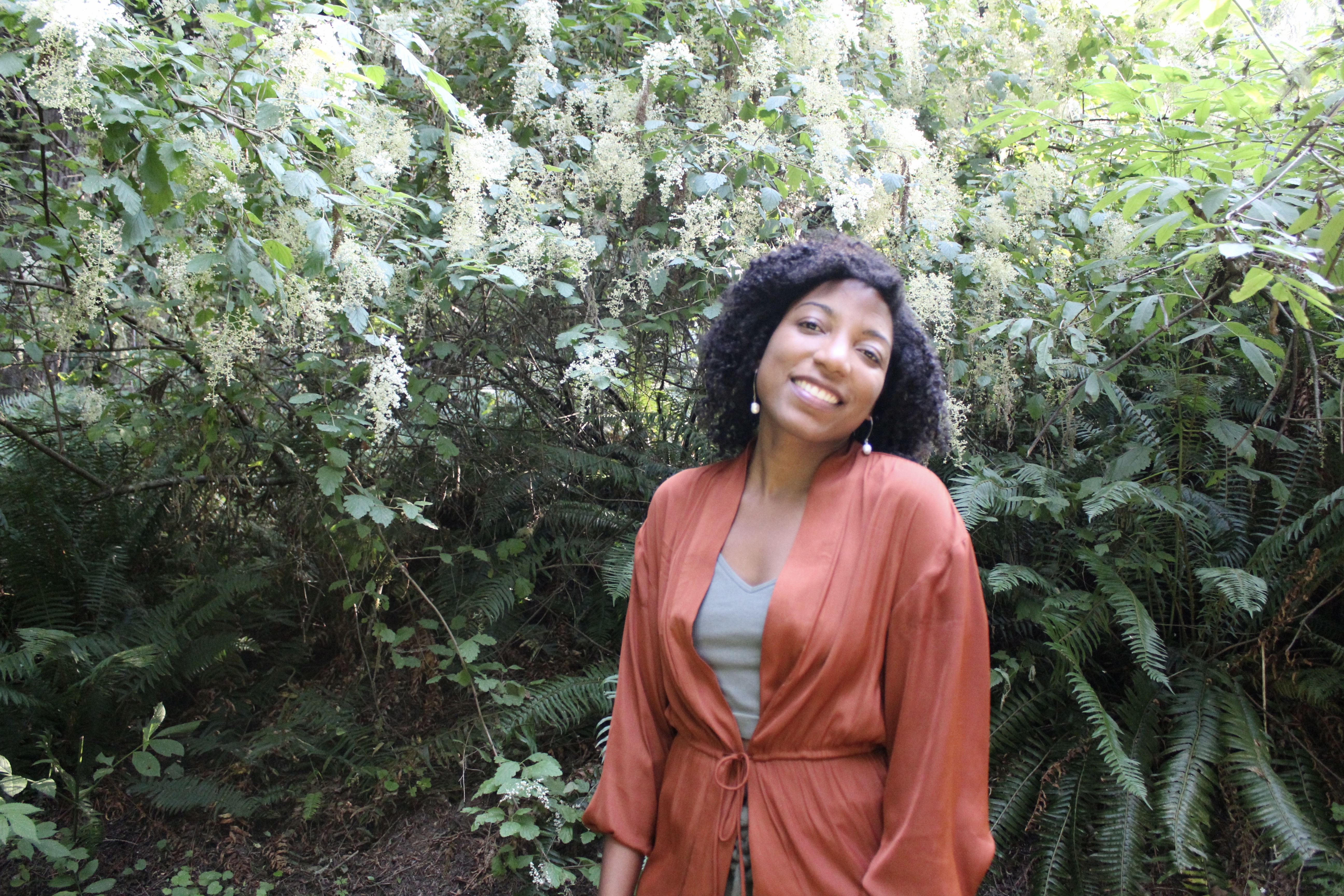
Founder, technature
I have had many life experiences that have brought me to this moment. The last nine years were spent in intuitive energy healing and facilitation. Before that, my most recent corporate role was as a financial analyst. I have been waiting for a moment that required me to bring these parts of myself together.
AI is that moment.
The more I studied AI ethics, policy, and governance, the more I saw the same gap everywhere. People outlining the problem, but no one speaking about a real response. A response that recenters humanity.
Effective and Ethical AI: Integrating Technology and People Strategies, Brown University, 2025
AI Governance Training, AI Tech and Privacy Academy, 2025
Intuitive energy healing and facilitation practitioner, 9 years
Former financial analyst
The best place to start is a conversation. Schedule a workshop and we will talk about where your team is, what you are navigating with AI adoption, and whether this work is the right fit. From there we figure out the next step together.
Schedule a workshopYour team does not need to choose between using AI and staying human. That is a false choice. technature is the work that makes both possible.